Friday, February 18, 2011

Streets of Angouleme

Not all the artwork is found indoors, in galleries or in books during the Festival International de la Bande Dessinee.

Here's a selection of street art and a couple of festival surfaces. Most of the street art was taken late on Saturday afternoon during a little walk through the town's narrow, winding streets. Even with the buzz of the festival, Angouleme is an attractive historic town. Limestone is the dominant building material and its widespread use makes the town feel ordered and calm. For me, having grown up around Fremantle, I found all this limestone quite evocative.


Let's start with the big one. Rue Hergé is the main street of the town. Here's the man it's named after.

Cheating a bit here as the illustration is part of the festival imagery, but part of the flavour.


Again, the festival uses BD images to good effect.


This one on a postbox appeared to be permanent. 

But not all course not all of the artwork is state approved.


Someone I met while walking the ramparts.


Another rampart dweller.


Artists' studio doors


Paste-up on the window of an empty yard.


And another, part of a cluster of paste-ups.


This is found near the corner of Rue Froid and Rue du Soleil. 


At night the limestone walls of the Hotel de Ville became a giant projection screen.


Careful, they might hear you

It's always a little anxious-making when I am being interviewed for radio. I'm never sure what crazy thing I might be tempted to say, what crazy kite I'm trying to cut free. Luckily being interviewed is an infrequent event.


Late last year I was interviewed about Look! by Sarah L'Strange for the Book Show on Radio National.

At one point I told her that I didn't read much adult fiction because it was so boring. Thankfully this piece of wisdom was left on the cutting room floor. What did go to air is a really good 20 minutes about the pleasure and process of picture books. Also interviewed are Ann James, Shaun Tan and a couple of parents and their children.

You can hear the program via the Book Show website.

Wednesday, February 2, 2011

Welcome to Angouleme: world comics capital

Just one of the many marquees, or bulles, that are part of this massive festival. Photograph taken from the roof of le Hotel de Ville, looking onto le Noveau Monde marquee.

Imagine the crowd at the MCG, the AFL grand final. Double it and then add a few thousand more.More than 200,000 people turned up for the 38th Angouleme International Festival de la bande dessinee. And like an AFL grand final, people come from all levels of society.  Angouleme, two hours by TGV south-west of Paris, is indisputably the home of BD in France. Don't be put off by the term 'la bande dessinee': literally it means 'drawn stories' and encompasses comics, graphic novels and sometimes picture books.


Saturday afternnon in Angouleme: packed!


Diversity is at the heart of this extraordinary festival. Across four days and nights, the festival caters to all tastes. Exhibitors, artists and publishers also come from all over the world.I met French, Romanian, Belgian, Finnish, French, Spain, and Hong Kong publishers, writers and producers.

Australia however, is largely invisible. In 2008 Shaun Tan won the festival's Best Album prize for Là où vont nos pères, or The Arrival. The young independent publisher I spoke to this weekend thought Shaun is an American. We are the great unknown, and Australians could learn a great deal by coming to this festival. Why more, or indeed any, Australians don't go there is a mystery to me.

Highlights included:
This year's festival president, Baru, is renowned for autobiographical depictions of the French (and migrant) working class, beginning in 1982 with Quéquettes Blues. The exhibition that honoured Baru's work was generous, imaginative, sympathetic, just a delight to explore and experience. Baru's exhilarating exhibition Debout les damned de la terre (translating roughly as Showing the damned of the earth) is a journey through working class lives over fifty years. Baru's massive body of work was smartly curated, displayed with real panache, and a great introduction to this artist.

Part of the marvellous Baru show that also included video, a documentary film, juke-box, old cars, boxing, rock and roll and original examples from his huge body of work.


Kaleidoscope: a history of bande dessinee in Hong Kong produced by the Hong Kong Arts Centre succinctly, elegantly and engagingly explored a turbulent past and present. The show - designed for touring - touched on the political, economic and technological changes that have driven Hong Kong's diverse visual comics  culture. But it looked so good that it could easily stand as a permanent exhibition. I would love to see this show in Australia.
Kaleidoscope world: Hong Kong's classy comics history
Kaleidoscope was housed in a former 'cave', a storage space for wine and grain.


The design of the Hong Kong show was museum quality - built in road cases and designed for travel.


The varied, diverse and distinct thematic marquees, ranging from the big (really packed) commercial houses to the edgy and innovative (Pavillon Jeunes Talents). If you want to see what is happening in comics internationally, this is a great way to see it. Angouleme is not just French and Belgian comics: it welcomes the world. The French remain famously relaxed in matters of sexuality.


 Vie de Merde is a raunchy, very funny slice of teenage life.

And finally, Les Concerts des Dessins. I saw three, each very different in flavour though using the same ingredients: live music matched live drawing. Malian singer Fatoumata Diawara was coolly complemented by illustrator Clement Oubrerie. On the other hand, Jon Spencer's new outfit Heavy Trash rocked the house down (around 800 screaming French women and men going absolutely bonkers) while Baru and friends drew up scenes of rockabilly mayhem, culminating in the artists setting fire to their pictures. Why don't all concerts come with live illustration? It was a hell of a way to go out.

Baru and friends get Jon Spencer up on the screen, while the band rocks on stage.


Angouleme is not a convention, or a fan-meet. And it's not, obviously, only about Tintin, Asterix and Spirou. There is an exhaustive schedule of in-conversations, panels and debates. 'Is Temeraire a little Nazi?'; 'Teaching BD in art school'; 'Lesbians and bande dessinee' 'Violence and manga'; 'Mainstream or indie - is it necessary to choose?' There is also a rights market, meetings with artists, film screenings and projections, book signings, sales (oh, my suitcase) and an incredible buzz throughout the town.

The festival is both a celebration and a masterful promotion of the bande dessinee. Prizes are awarded on the final night. This year's Angouleme Festival Grand Prize winner, and therefore next year's festival president, is Art Speigleman. The shortlist of 51 titles in a range of categories are heavily promoted in bookshops and beyond. FNAC (think JB HiFi meets Borders meets Ticketmaster), is a festival sponsor. National newspapers and magazines across the political and cultural spectrum get their hands dirty. The industry, its artists and readers, are taken seriously.
Yes, the French comics industry was built on the likes of Tintin and Asterix, but there is so much more. So, so, so much more.


Travel to Angouleme was supported by the Copyright Agency Limited Creative Industries Career Fund.

My host Evelyne was also extraordinarily helpful in all sorts of ways.
Merci beaucoup, Evelyne. Vous êtes génial!

Sunday, January 2, 2011

The French, they do this comic book thing differently

The main reason for going to France at this crazy time of year is be at the Angouleme Festival International de la Bande Dessinee, from January 27-30. I have my four day pass, I have accommodation, I have the train ticket booked from Paris. This year, it's Hong Kong in the spotlight, along with much more. The exhibition design hits a high standard and I am really keen to see this year's work for myself.  


The Copyright Agency Limited provided me with an airfare to travel to France and see this festival. I was thrilled to receive this funding because it supports research into graphic novels and I look forward to sharing what I learn when I return. In youth literature there is much talk of young people and their interest in comics and graphic novels, which may be true. But in Australia we produce so little of our own material. Artists like Shaun Tan don't come along every day - so how can Australia's book industry nurture the graphic novel culture? I am hoping that Angouleme might provide a few hints. After all, a festival in the middle of winter, hundreds of kilometres from Paris, where accommodation is at a premium, but still attracts nearly 250,000 people, must be doing something for readers.

Friday, December 31, 2010

Counting down

In just under three weeks time my wife, daughter and I will be heading to France for four weeks. After our visit nearly three years ago we are keen to get back.

We must be keen: the weather looks like being absolutely arctic. On the plus side, the dollar is more than pulling its weight against the euro. And January-February is not exactly peak tourist season. So museum and gallery queues are unlikely to have us standing out in the sleet for an hour or two. But accommodation is cheap - especially compared to what you pay in Australia. We've booked apartments through the excellent Homelidays website. We've stocked up on thermal clothing, gloves, scarves, hats and boots. For coats we are hoping to pick up something in the soldes. And I am hoping to do a little of this.
What else should we do? Is there anything on the *avoid* list?


Ca glisse à l'Hôtel de Ville
Uploaded by mairiedeparis. - More professional, college and classic sports videos.

Tuesday, December 7, 2010

Say it with pictures


The New York Times recently ran a story about the sharp decline of picture book sales in the United States. There are many reasons why this could be so, not least is the nearly 10% unemployment and declines in library services through years of tax cuts. What the situation is in Australia sales-wise I couldn't say. 


But there are many reasons what sales might decline. Children of course are introduced to what is called (somewhat euphemistically I think) screen culture at an early age. So they become very dexterous with their thumbs, less so perhaps with their vocabulary.

I also wonder to what extent parents are keen to demonstrate their child's reading skills. What better way than to kick away the ladder that pictures provide.  Since reading has become one of those fought over issues, does this also feed our anxiety? And why are we so concerned with measurement and less troubled by questions about the transmission of cultures, the sharing and propagation of stories?


In regard to the prospect of children being rushed onto chapter books, I wonder to what extent parents are anxious to show how well their children are reading? Do they know what they are missing? And being able to decode a word should not be confused with understanding or even enjoying a story. Many books have gone back on to the shelf that simply have not arrived at the right time. The Tale of Despereaux is one that waited on the shelf perhaps twelve months before going on to become a firm, enduring favourite. Some schools impose the policy that students in free-reading time must read 'to their literacy level'. I often wonder how they measure a child's imagination. 

Of course, reading independently also absolves parents of reading aloud at bedtime and at other times. Last week a picture book exhibition opened, which I had the privilege to curate. Reading with my daughter was an immense influence on the stories and pictures selected. Put it this way: I would not have understood these books in the way that I do, as stories and images connected to a real child's life, her imagination, her growing and changing, without seeing the stories through my daughter's eyes. 

Picture books give such immense pleasure. Lauren Child's early books were powerful shapers of her worldview: the word play, the sideways view of the people close to us, the sense of quiet mischief and seriousness in the pursuit of the things we hold dear. These are powerful and important values, yet strange how the resonate in that humble medium. 

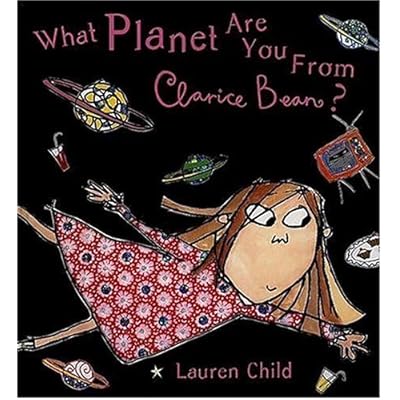
Today as we came up the path I remarked on how beautiful our neighbour's trees are. Our neighbour is old and frail and may not have another summer left in her in that hot, little house. And then what of her trees? "I'll being chaining myself to them", said my daughter. Said it in a way that reminded me of the Lauren Child book, What Planet Are You From, Clarice Bean? about eco-warriors who camped in a tree, turned the family upside down and got themselves on the television news. 


All of this was long ago, before she really took notice of the news or wondered about global warming or the floods in Pakistan. And yet somewhere in their the imprint was made. A way of looking at the world. Whether we chain ourselves to the trees is another matter entirely. But in a book, we learned about what was important in the world.

Saturday, October 30, 2010

Everything old

At Moonee Valley racetrack last Saturday, Daryl Braithwaite was whipping the crowd up with his 1991 hit Horses. No finer music critic than Drew Morphett observed that ’20 years ago Darryl seemed gone for all money, and yet here he is, the crowd in the palm of his hand’.

Later that night Ricki Lee Jones, the writer of Horses, was doing similar at the Myer Music Bowl, lacking only Darryl’s equine anthem. Ms Jones joined Sinead O’Connor and John Cale, others whom we might say did their best work in another generation, or two, or three. An appearance from Archie Roach was cancelled due to his suffering a stroke a week prior. Only the indigenous quartet - Dan Sultan, Geoffrey Gurrumul Yunupingu, Ursula Yovich and Leah Flanagan - could be said to be of more recent or current times. The occasion was the closing night of the Melbourne International Arts Festival.


(Dan Sultan, delivering the goods.)

The theme of this geezer jamboree was transcendence. A topic those of us greying at the temples, thin of pate and/or thick of waist, might easily turn to. The artists’ brief was simple: select and perform seven songs ‘to leave behind’. Which is, I guess, an elaborate version of the parlour game: ‘what song would you have played at your funeral?’ Each performer also chose a Leonard Cohen song. (Had Leonard been in attendance the average performer age would have risen by at least a decade.)

John Cale, who could make a case for popularising Cohen’s anthem Hallelujah, evaded time's tidemark with a bent version of Heartbreak Hotel. This stratagem seemed like the novelist dabbling in historical fiction, a neat sidestep around more current concerns.

Like Moonee Valley, the Myer Music Bowl was packed, even if those on the lawn could be forgiven if they huddled for warmth. But given the audience paid around $110 each to be here, this gig was as much about their involvement with transcendence. What songs you would leave behind; what songs you would take with you? Perhaps such questions are the luxury and privilege of middle-age. Surely twenty-somethings are too busy living, than to sit on a freezing hillside contemplating their eternal soundtrack.

A slightly different version of this post appeared on the Wheeler Centre website.
(Thanks to George Dunford.)