Showing posts with label france. Show all posts

Monday, February 10, 2014

In search of a word

When this song popped out of my iPod last night, I was in the next room. Something about the tone of the music carried and made me hear for the first time.


Having never really understood the text, I went looking for a translation. A quick scan of the google pointed only to the French lyrics, which was handy but only took me so far as my French could flatteringly be described as beginner to immediate. There is sure to be an English version of two (million) out there, but translating and playing around did keep me from the TV and a documentary about an over-rated Australian pub band that somehow had a bunch of hits. It seems the title is something of a paradox, and resists literal translation. (The lyrics of Je t'aime moi non plus don't make much literal sense, but nobody complains about that.)

Fuir le bonheur de peur qu’il ne se sauve was written by Serge Gainsbourg and sung by Jane Birkin. The song was written in the wake of their break-up, a parting gift, and released in 1983.

Like its title, Fuir le bonheur de peur qu’il ne se sauve resists surrendering its passport to English pop. What is it? (Let's not call it a certain je ne sais quoi.) The bittersweet quality of the lyric is in the DNA of the song. The tension between the song and the singer is part of it: the lover telling the loved to flee, run away. An abject, adolescent response (a fear of intimacy?), might be all that such a stance could offer turns transcendent. If the song has a counterpart in English, then perhaps something like Hallelujah by Leonard Cohen might come closest. To my ears there is an intensity to the melody and the lyric that all Serge.

Catherine Deneuve read the text at Serge Gainsbourg's funeral. Serge Gainsbourg died in 1991.

There are numerous versions of Fuir le bonheur on YouTube, filmed over many years. In a late version, the television audience stands when Jane Birkin enters the studio, and again at the song's end. I saw Jane Birkin perform at the Recital Centre in 2012. She sang this song, accompanied by a Japanese quartet. Wonderful.

I have no doubt taken taken liberties with the translation. Apologies for the clunks. 

Fuir le bonheur de peur qu’il ne se sauve

Serge Gainsbourg

Flee happiness lest it should disappear
That the azure sky turn purple
To think or move on to other things,
Would be better.

Flee happiness lest it should disappear
And say there is an ‘over the rainbow’
Always higher than the sun above.

Glorious to believe in the heaven,
To believe in gods
Even when all seems terrible to us
And in our hearts are blood and fire.

Flee happiness lest it should disappear,
Like a little mouse in an alcove corner
Sense the tip of its pink tail
Its eyes ablaze.

Flee happiness lest it should disappear
And say there is an ‘over the rainbow’
Always higher than the sun above

Glorious to believe in the heaven,
To believe in gods
Even when all seems terrible to us
And in our hearts are blood and fire.

Flee from happiness lest it should disappear
To see, sometimes to wish, to be safe from crying
Who knows the depth of things is unhappy

To believe in heaven,
To believe in gods
Even when all seems terrible to us
And in our hearts are blood and fire.

Flee from happiness lest it should disappear
Tell me you love me, again, if you dare
I would like that you find other things,
Better things

Flee from happiness lest it should disappear
And say there is an ‘over the rainbow’
Always higher than the sky above

Glorious.

(translation, Mike Shuttleworth)


Fuir le bonheur de peur qu'il ne se sauve
(Words and music by Sere Gainsbourg)

Fuir le bonheur de peur qu'il ne se sauve
que le ciel azuré ne vire au mauve
penser ou passer à autre chose
vaudrait mieux
fuir le bonheur de peur qu'il ne se sauve
se dire qu'il y a over the rainbow
toujours plus haut le soleil above
radieux
croire aux cieux croire aux dieux
même quand tout nous semble odieux
que notre cœur est mis à sang et à feu

fuir le bonheur de peur qu'il ne se sauve
comme une petite souris dans un coin d'alcôve
apercevoir le bout de sa queue rose
ses yeux fiévreux
fuir le bonheur de peur qu'il ne se sauve
se dire qu'il y a over the rainbow
toujours plus haut le soleil above
radieux
croire aux cieux croire aux dieux
même quand tout nous semble odieux
que notre cœur est mis à sang et à feu

fuir le bonheur de peur qu'il ne se sauve
avoir parfois envie de crier sauve
qui peut savoir jusqu'au fond des choses
est malheureux
fuir le bonheur de peur qu'il ne se sauve
se dire qu'il y a over the rainbow
toujours plus haut le soleil above
radieux
croire aux cieux croire aux dieux
même quand tout nous semble odieux
que notre cœur est mis à sang et à feu

fuir le bonheur de peur qu'il ne se sauve
dis-moi que tu m'aimes encore si tu l'oses
j'aimerais que tu te trouves autre chose
de mieux
fuir le bonheur de peur qu'il ne se sauve
se dire qu'il y a over the rainbow
toujours plus haut le soleil above
radieux


Tuesday, January 1, 2013

And the beat goes on

This time last year I translated a summary of annual bande dessinée sales activity in France. Lo and behold, the good people of toutenbd.com have posted the 2012 report by the Association of Bande Dessinee Journalists and Critics (l'ACBD).

It would appear that despite the stalling economy of France, and of Europe more generally, activity in graphic novel publishing, buying and reading remains reasonably healthy, though the stagnant economy is not without implications for the industry.

In the interests of spreading the word about bande dessinée to English language readers, here's my translation of the toutenbd summary. If you would prefer the original text, you can read it here in French.


Bande dessinnee 2012: proliferation and polarisation
The annual meeting of the Association of Critics and Journalists of Bande Dessinée has again noted the increased number of books published but also that four publishers largely dominate the sector.
The traditional annual report from the general secretary of the Association of Critics and Journalists of Bande Dessinée (ACBD) Gilles Ratier, has been handed down for 2012. For the seventeenth consecutive year the number of books (albums) published has increased: 4.28% growth from 2011, to 5,565 books published in 2012, of which 4,109 were new titles.
The growth of new titles is in four distinct areas: Franco-Belgian bande dessinée; manga; American comics (genre comics); graphic novels and experimental books, creating a more complicated arrangement of titles and presentation of albums in bookshops, Gilles Ratier reported.

Eighty-nine series or complete works of authors succeeded in selling more than 50,000 copies (ten less than for 2011) and providing the industry's core sales. The five highest sales are: one million copies of volume 13 of Titeuf by Zep (published by Glénat); 450,000 sales for the fifth Lucky Luke by Daniel Pennac, Tonino Benacquista and Achdé (Lucky Comics); 440,000 copies of Largo Winch, volume 18, by Jean van Hamme et Philippe Francq (Dupuis); 440,000 copies of Blake and Mortimer, volume 21, by Yves Sente and André Juillard; and 350,000 sales for XIII, volume 21, by Yves Sente and Iouri Jigounov (Dagard Benelux). In regard to manga, it's no surprise that Naruto, with three new titles each selling 225,000 (Kana); One Piece with five books between 135,000 and 165,000 (Glénat) and Fairy Tale's six titles each selling 85,000 (Pika).

As in previous years, the report notes a strong segmentation within the market: four groups - Delcourt (Akata, Tonkam, Soleil Manga and Quadrants), Media-Participations (Dargaud, Kana, Le Lombard, Dupuis, Graton, Blake and Mortimer, Lucky Comics, Fleurus/Edifa/Mame, Mediatoon Publishing, Huginn & Muninn, Urban Comics), Glénat (Comics, Disney, Mangas, Treize étrange et Vents d'Ouest) and Gallimard (Casterman, KSTR, AUDIE/Fluide glacial, Jungle, Denoel Graphic and Futuroplis) - dominating the production and activity in the sector with 44.87% of production, and that 326 publishers and/or imprints published bande dessinee in 2012 (against 316 in 2011).

Once again, development around digital publishing of bande dessinee is very cautious, so that those concerned with digital publishing more concerned with creating digital imprints (Iznéo, digiBiDi, etc) than the creation of purely digital content (Plumzi, for example).

The legal access progressed less quickly than the pirate copies (10,000 titles are easily accessible according to the l'Observatoire du livre et de l'ecrit en Ile-de-France) with hardly 6,000 available. On the other hand, crowd-sourcing is established with Sandawe (28 projects drawing together half-a-million euros), My Major Company (17 projects, 172,000 euros) and Ulule (14 projects, 26,000 euros) who come together and are launching print publications.

Buzzcomics draws on the l'ACBD report to show the extent of events for Franco-Belgian comics,  including festivals, fairs, markets. They note that in francophone Europe in 2012, there were 489 festivals, fairs, markets and industry gattherings - and that the extent of this activity is continuing to expand, particularly in France.


Sunday, June 10, 2012

There and back again

There and back again within a week. Usually a trip to France involves years of idle dreaming, months of detailed planning and weeks of anxious anticipation. But this one was different. This time, it was the festival organisers to whom the planning and anticipation fell. For me, it was mostly a matter of turning up and keeping my eyes an ears open. I was invited to represent the Melbourne Writers Festival at meetings for the Word Alliance, a network of major writers festivals, of which Etonnants Voyageurs is a part.

The Word Alliance was embraced warmly by Etonnants Voyageurs, reflecting as it does, many of the values of the St Malo festival. The local media reported on the visit and canvassed that issues discussed at meetings.

Michel Le Bris, Etonnants Voyageurs director, centre left. (Pic ouestfrance.fr)


The annual St Malo literature and film festival, Etonnants Voyageurs, is unlike any other. It is certainly a major event, pulling around 60,000 people over the four days (including a schools program that I missed) to it's broad offering of panels, readings, exhibitions, screenings, book market and more besides. And given the absolutely perfect weather that arrived in time for the long weekend. The spring that stubbornly failed to appear for months unrolled itself in one glorious long weekend of blue, blue skies and gentle breezes.


At least, unlike any that you would find in Australia. I came away from the three days with the sense that this is very much an auteurs festival, auteur in the sense that the festival director firmly controls the direction of the event. As pointed to in the previous post, this festival takes as its purpose the task of widening the boundaries of 'French writing', which it redefines around the idea 'writing in French'. This immediately opens up the definition to include the many Francophone countries and cultures, and implicitly challenge the Paris as the bastion and tastemaker of literature. The 6th arrondissement is not the be all and end all of French writing.

The idea of 'la France pluriel', multicultural, multi-ethnic France, is central to the festival's agenda. I discovered that Rennes, the nearby city and capital of the Brittany region, recorded the highest socialist vote, and lowest vote for far right candidates, in the recent election. A politically progressive literature festival has found a good home in the region.

Like any good festival there was far more happening than one could hope to see. The main venue held a number of exhibitions, including a selection of grueling images under the banner Le bande dessinee speaks to the world. I could only describe the images as uncompromising, showing the violence and consequences of war and conflict in places like Chechnya, Rwanda and Cambodia. If you ever doubted that graphic novels could handle serious subjects here was a show to banish the doubt.

Poets in French, Arabic, Spanish and Flemish were heard; novelists in French and American, humorists, travelers, photographers, directors, essayists, memoirists and more were on stage. The variety of venues, both in the conference centre and the theatres, cinemas and schools of St Malo gives the program a nicely varied and authentic quality. It was also a good excuse to explore the narrow streets within the walls.

My trip was supported by the Institut Francais and the festival. Thanks to Emmanuel, Michel Le Bris, the logistics team and Word Alliance colleagues, from whom I learned a very great deal.

And that amazing beach, once more. 

Thursday, May 10, 2012

Grand amateur

Last year I was very fortunate to attend the comics festival in Angouleme. This year I am heading to St Malo for a few days to attend the Étonnants Voyageurs (Amazing Travellers) International Writers and Film Festival.

The event in Brittany is held over four days, including a schools day, from May 25-28. The Melbourne Writers Festival is part of a group called the Word Alliance, a network of leading literary festivals that includes Edinburgh, Toronto, Jaipur, Beijing and St Malo. My trip is to meet with the directors of other festivals (although I am a program manager, not the director!), and to plan ways that we can work together to create stronger programs and increase international participation.

It's fair to say that I am just a little bit excited. St Malo looks like an amazing place. It's the area where A Summer's Tale by Eric Rohmer, one of my favourite films was shot.


St Malo is a few kilometers from Mont St Michel. Which I won't have time to visit. Dommage.


And the festival looks amazing! It's held within the walls of St Malo, great solid granite walls that were substantially damaged in WWII, but have been restored. The program naturally has a very French flavour, though it's agenda is to challenge and extend the boundaries of what constitutes 'French' writing.  Lauren Elkin writing in The White Review gives a pretty perceptive take on the issues at stake and how the festival responds to them. Anyway, I am fascinated by the idea of a festival having an argument of sorts with its literary culture. So it will be more than interesting to see how this is played out. I look forward to meeting with the organisers of Étonnants Voyageurs and other Word Alliance festival folk.

The festival website provides bios for all people participating, and to my surprise, my name is there. But don't worry French people, I won't be giving any talks. Your ears are safe. But it is funny, sort of, to see myself described as 'grand amateur'. Quoi?

Saturday, January 14, 2012

Bande dessinée by numbers

The excellent ToutenBD.com, the French website dedicated to all things French graphic novels, recently posted the annual health check of the industry. Despite the economic straits France finds itself in, the comics industry continues to grow. While the overall picture seems quite healthy, a closer look reveals a more interesting picture. And students of the Australian publishing sector will certainly draw some parallels with our colleagues francaise.

Being on holiday and at something of a loose end, I have written a translation of the article, and added links. ToutenBD.com were contacted for permission but have not yet replied. You can read the original version at the website.

In the meantime, allons-y!


Bande dessinee is 2011: the boom of the sure thing

The annual meeting of the Bande Dessinée Critics Association (Association de critiques et tournalistes de bande dessinée) noted again this year the growth of the production of albums (books) -- but with the caution that publishers are supporting the safe bets.

The traditional annual report from Gilles Ratier, the general secretary of the Bande Dessinée Critics Association (ACBD) has been delivered for 2011.

For the sixteenth consecutive year, the production of albums has increased: 3.04% against 2010; an increase of 162 titles, for a total of 5,327 albums. However the report noted "the economic conditions are hardly favourable for industry, which for three years has lacked a strong engine. Hence, we have a general climate of watchfulness, highlighting safety first and anxiety!"

Watchfulness in effect because of the 5,327 albums only 3,841 are strictly new (of which only 1,577 originated in francophone Europe). The traditional publishing sector (le secteur patrimonial) is fully expanded, with 1058 new releases, compilations or bind-ups (980 in 2010), 224 woks dating from more than 20 years published finally in album and 31 francophone series reprised or continued by new creators.

Watchfulness also because in 2011 on 99 "sure things" (valuers sûres), had sales of more than 50, 000 copies and bestowing the bulk of sales on this sector. At the head of these 'locomotives' are: XIII (500,000 copies); Kid Paddle (360, 000) and Boule et Bille (253,000). Counting manga, ten series (from five publishing houses) provided 50% of sales, Naruto at the head (250,000 copies of each of three titles in the series).

Looking at publishing houses, 310 publishers produced bande dessinée in 2011. And yet the trend towards concentration is again confirmed: four groups accounted for 43.6% of production. With the acquisition of the majority share of the publisher Soleil by Guy Delcourt, Delcourt became by far the biggest producer of albums with 840 titles, being 15.77% of production.

On the economic graph, the prize nevertheless gos to Médias-Participations group (Dargaud, Le Lombard, Dupuis, etc).

The report noted the strong success of the bande dessinée blogs, which have become a "fishtank" (un vivier) for the print publications. On the other hand few were seduced by the e-book. And bande dessinée is always well exposed in the news stands, with 76 specialist journals.

FIN

So, thanks again to ACBD and ToutenBD. And apologies for all infelicities in 'la traduction'.

Wednesday, April 20, 2011

Three little gigs

Gig one:
On Wednesday 4 May, I will be speaking with Meg Rosoff at the Wheeler Centre. It's a free event but bookings are preferred. More information here.


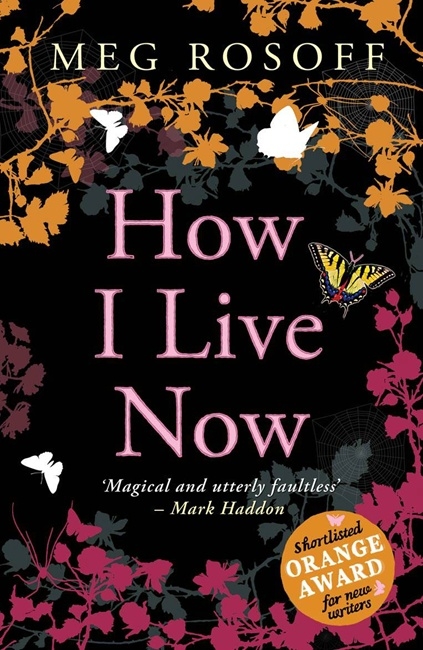
I am a bit of a fan of Meg Rosoff. Her first novel how i live now is a landmark book and a stunning debut. Rosoff worked on and off in advertising for about two decades before changing track with this extraordinary book. Her latest novel, The Bride's Farewell, keeps the standards high. It's a taut, gritty historical novel about a girl who flees from an arranged marriage and survives, somehow, in the fields and farms in C19th England.
UPDATE: The Wheeler Centre posted the video of our conversation here.

Gig two:
On Saturday 14 May, I am giving the final curator's floor talk for Look! The art of Australian picture books today.
Detail of illustration by Leigh Hobbs from Old Tom’s holiday
Little Hare Books, 2002, ink, pencil and watercolour on paper, 
State Library of Victoria


Gig three:
Then at the end of the May, Monday 30th to be exact, I am talking at Readings with Bernard Caleo as part of What It Is. This monthly comics event is a kind of an ideas laboratory for all things to do with comics, graphic novels, or in my case, bande dessinee. So I will be talking about Angouleme and what I know about French comics. Shouldn't take long.


Bernard Caleo is the publisher of Tango, a comics anthology. He is brilliant at making comics, talking about comics, and performing comics, so I am looking forward to that. It's sure to be a unique experience. Also speaking on the night is Brenton McKenna, Broome-based comic writer and illustrator, whose book, Ubby's Underdogs comes out very soon. I met Brenton last year when he still working on this book so I am dying to see the final results. As my conversation with Bernard is around creating Australian comics Brenton's experience should be fascinating.

Wednesday, March 2, 2011

Heavy Trash unload in France

This post is dedicated to the team at Rock Town Hall.

One of the highlights of the Angouleme Festival de la Bande Dessine were the Concerts des Dessines. Here's a taste of Heavy Trash, led by Jon Spencer, getting down to business.


Jon Spencer speaks not only the worst French you have ever heard, but forgets the name of one of the premier illustrators. But heck, c'est la vie, c'est la pierre.


The dignified guy with the silver hair is Baru, festival president. I have fallen just a bit in love with his work, which depicts working class men and their lives in an un-sentimental way, like the love child of Raymond Briggs and Paul Kelly. I like the way he draws, very tentative, feeling his way through to the character, nothing formulaic. Baru is joined by Chauzy and Flao.

Tour Baru's fantastic exhibition here.

But there is nothing stopping Jon Spencer, and when it all comes together at the end, well, it is indeed a very rock and roll moment. Or as the French say, un pur moment du rock and roll.


This year the festival presented three concerts with drawing. I was lucky enough to see all three. Fatoumata Diawara, the Malian singer and her polished, nimble band appeared with illustrator Clement Oubebrerie, his gentle watercolour and ink pen lines occasionally showing something stronger and darker.

There is more video and Concerts des Dessines at the festival website. Areski Belkacem, sorry - I'm drawing a blank, led a band through a story titled Coup de Foudre (a sudden blow to the heart/falling heavily in love) that involved masked wrestlers, femmes fatales and cross-dressing to audience heavily loaded with school kids. Who loved every biff and clinch. The music was a slithery, rhythmic set that offered endless twists and surprises, a kind of rootsy, moorish funk.

Comics and music: who knew they could be so damned groovy?

Sunday, January 2, 2011

The French, they do this comic book thing differently

The main reason for going to France at this crazy time of year is be at the Angouleme Festival International de la Bande Dessinee, from January 27-30. I have my four day pass, I have accommodation, I have the train ticket booked from Paris. This year, it's Hong Kong in the spotlight, along with much more. The exhibition design hits a high standard and I am really keen to see this year's work for myself.  


The Copyright Agency Limited provided me with an airfare to travel to France and see this festival. I was thrilled to receive this funding because it supports research into graphic novels and I look forward to sharing what I learn when I return. In youth literature there is much talk of young people and their interest in comics and graphic novels, which may be true. But in Australia we produce so little of our own material. Artists like Shaun Tan don't come along every day - so how can Australia's book industry nurture the graphic novel culture? I am hoping that Angouleme might provide a few hints. After all, a festival in the middle of winter, hundreds of kilometres from Paris, where accommodation is at a premium, but still attracts nearly 250,000 people, must be doing something for readers.

Wednesday, December 9, 2009

Notes on the future, notes on the past

If you don't like pretension, look away now.

Over the past couple of years it seems I have become a bit of francophile. I know this puts me in a difficult position. The Rainbow Warrior, diplomatic slipperiness, Mr and Mrs Sarkozy. And that's before we look much of the recent movie output.

Since about 2006 I've been learning the language, slowly and perhaps quite badly. So I'm not quite ready to tackle Proust, but if I suddenly found myself lost on the Rue de Rivoli I could probably survive by ordering take-away coffee and turning left at the bank.

Learning the language was a response to a planned trip that I took with my family (less one) last year. I had spent about a fortnight in France in 1989 without so much as a bonjour to bless myself with.

At that time, I didn't 'get' France and I didn't enjoy it. The main reason was that I felt so hugely disadvantaged the entire time. Nothing was any fun. I mostly remember splitting headaches, possibly from the coffee, and walking for miles around Paris without ever seeing much. I know, I know...

So having been to France and satisfied my earlier frustration, why do I remain fascinated by the place? It is partly the exotic qualities. Melbourne is a great place to live but you couldn't call it one of the world's great romantic places. Lots of adjectives but not that one.

It is partly the myth of France that attracts me. I am fascinated by the contradiction between the old world and its modern manifestations. A country that is both progressive and deeply conservative. Paris pretty much invented the avant garde. Entwined in its history is a deep concern for the rights of man and yet the present is riven by racism. France is the seedbed of existentialism (and many other isms) and the place of so many grand cathedrals. And so on and so on.

When I went to university, cultural studies and semiotics were all the go. Out with the Anglo-American school, in with the French: Saussure, Roland Barthes, and hot on his heels, Foucault and then the feminists. I didn't get too far with all of this. Reading Sausurre and Barthes was a lot like going to France and not speaking the language. You could observe, and it could be vaguely enjoyable, but for the most part one had not a bloody clue what was going on.

I have been thinking about Barthes lately because I have been reading a book on French and Belgian comics, which takes an old school semiotic approach French and Belgian comics. It's a closely argued 200-odd pages on how meaning is made in la bande dessinee. It was a pleasure to revisit this kind of writing and thinking, this analytical approach to a subject. It was like revisiting a younger self.

Now, I feel like I get it. I get that the task the theorist undertakes is to tease out meaning, not to pronounce it. I get on board and enjoy the game, see how the writer investigates the relational nature of meaning. And in a funny way, I don't read it with the same earnest approach that I might have 25 years ago. I enjoy the pursuit.

I think those early university encounters, even in their frustrations, set me up for a longer interest in France. I should repeat that I didn't ever make great headway in matters theoretical. I lacked the truly obsessive character needed to fully get ahead in that. But I tried. It was like I didn't really understand what theory was for.


Roland Barthes was like a sideways entrance into French culture of the period he was writing about. Perhaps what Barthes did was point me towards a world that I didn't understand. But I did enjoy the view of the world that certain French writers and thinkers provided. Whether it was the dandyism and style of Jean Cocteau's films, the wryness of Louis Malle or Philippe Noiret, or a dozen other films, there is something revealing and serious about this stuff.

I also enjoyed, if that is the right word, the books of Simone de Beauvoir. All her four books of her autobiography; The Second Sex, The Blood of Others, She Came to Stay, The Mandarins. Especially that one. By the time I read it, I knew enough about de Beauvoir to piece together some of the facts and the fictions. Perhaps I dreamed of going to another country and starting a new life with another lover, as the character does in The Mandarins. Maybe, can't remember.

I have just finished reading to my daughter a French novel (translated, of course), Toby Alone by Timothee de Fombelle. The book has a little motif towards the end that reminds Toby that his life really only has one true thread and he can turn his back on it but it will always be there. That there is no running away, just as it was for de Beauvoir.

While we were in Paris, we made a point of going to Montparnasse Cemetery to see Simone de Beauvior's grave. It is a simple, quite plain headstone, near the limestone wall. I confess that I was just a little bit cross that she is sharing eternity with Sartre, who, I'm afraid, I see as very much her inferior. Their lives were far more complicated than the ending implies, but as another poet said, such is life. It was, I think, de Beauvoir who really got me hooked on French culture. In her autobiographies she is both a close-hand observer and a critic. An insider and outsider. Think of the reception that she received on the publication of the Second Sex! C'est scandaleux! Her books so fascinated, informed, confounded and yes, inspired me, that 25 years later I am still looking for answers.

I encountered Simone de Beauvoir's books at a time that it was absolutely crucial for me. They provided escape, challenge and insight at a time when I needed certain things to be explained. In writing about her past, she provided me with the sense of a future.

Thursday, October 29, 2009

Angouleme dreaming

When we went to France last year (like it's something we do often), the idea jumped into my head that I might come back and explore the world of la bande dessinee. Everybody knows the French and Belgians are nuts about graphic novels and everybody knows and has probably read some Tintin and Asterix.


But the whole French graphic novel thing jumped to the front of my mind when, coincidentally, Shaun Tan won the Angouleme International Comics Festival Prize for La Ou Vont Nos Peres. Although we probably know it best as The Arrival. So yay, Shaun.


Today I read the Angouleme Comics Festival is 'the largest and most significant comics festival in the world. (So says Bart Beaty in Unpopular Culture, transforming the European comic book in the 1990s). So you might say that to win such a award is the comic universe equivalent of the Booker Prize. Or Le Tour de France.

Anyway, I got thinking that I might like to go there to find out how the French do things and why it is that la bande dessinee maintains such a broad audience. Why is it that comic books are seemingly not viewed as the preserve of pimple squeezing dweebs, would-be manga cultists or indie hipsters? Hey, maybe the French really do look down the Gallic conk at comic book readers. But what the heck, the industry is large, diverse and ever-changing. Not without its problems I'm sure but big and complex.

At least I hope so. Because this week I learned the good people at the Copyright Agency Limited have provided me with a little money to travel to Angouleme in January 2011 to attend the festival. So yay, CAL. I would love to go this January, but the year's gap gives me time to plan and set up other activities. And save some euros. And keep learning the language.


Saturday, July 4, 2009

La crise...cinema?

My friend, a film reviewer, despairs of French movies. 

John, let's call him, is chugging back a minimum of four films each week. Some of them are from the Hexagon. Recently he slung me a fistful, including Welcome to the Sticks (Bienvenue chez les Ch'tis) and The Grocer's Son (Le Fils de l'epicier). And for good measure the 1968 Gainsbourg-Birkin premier collaboration, Slogan


Slogan is the story of an advertising man's midlife crisis (la crise du moyen age?), which is, I admit, a pretty banal plot. Seriously wealthy and successful guy gets bored flying to Venice to pick up advertising kudos. Meets beautiful, much younger woman, throws over wife. Fellini's 8 1/2 it is not. 

Jane Birkin is 22, wears improbably short frocks and speaks with an appalling accent. Until she auditioned for the film, Birkin had never spoken French. (She admits to all of this in an accompanying 30 minute documentary.) So, a middle-aged man fascinated by a woman far too young to be seen with who quickly becomes an obsession. My friend John might suggest here that this pretty much the French film industry's calling card...but back to Slogan.

This is a curious film. Made in 1968, it's oblivious to the Paris riots, even though when the couple do eventally (inevitably?) move in together it's in the shadow of the Pantheon. Don't look to cinema for history, I guess. Serge Gainsbourg's idea of revolution was something else altogether I suspect. The film is clunky in the script and the production. The pacing is uncertain and even the music written by Gainsbourg fails to establish a clear motif or mood. Laboured might best describe the enterprise. But the film established them as the "it couple" of the time and changed Birkin's life. 

Neither Birkin nor Gainsbourg seem comfortable in front of the camera. There is often a self-consciousness that makes viewing the film uncomfortable. And yet...and yet. What starts as the lament of a middle-aged man turns into something much more interesting. Because as Evelyne, Birkin's ingenue becomes the rebel. There is one darkly funny, slightly cringe-making scene in which Serge introduces Evelyne to a score of friends and colleagues: "Please meet my little home-breaker" he says to a gallery of disapproving faces. Clearly infidelity is okay as long as it stays out of sight. Everything about their relationship put two fingers up to the ruling standards of the day. And their affair does catch a certain joy.

But the beautiful Evelyne quickly finds herself in the role of haus-frau. Her status as mistress is deeply uncertain. She demands that they have a baby, and that they marry. Both options seem rather quaint nowadays, but likely perhaps then. Not even frequent trips Venice can quell the resistance, her apparent freedom now another prison. In Venice Evelyne meets a muscular Italian whose only qualifications for her heart seem to be driving a speedboat dangerously fast through the crowded canals and clambering onto historic bridges. Bogans it seems are international.

Serge meanwhile seems impervious to what goes on about him. He never seems to really solicit our sympathy, continuing in his lugubrious way. Until Evelyne and the Italian elope. And then he turns very nasty indeed. But freedom won't be denied. What is most striking is the extent to which Slogan unwittingly provides the template for Birkin and Gainsbourg's own relationship, which lasted twelve years. Birkin sets out the influence of Serge Gainsbourg on her life with lasting affection and respect.

In the DVD's accompanying documentary, Birkin talks of their separation as like an adolescent revolt, kicking over the boundaries set up by a tyrannical parent. She also talks about Serge's peculiar attractiveness and charm. It's a fascinating relationship that began with Slogan. Birkin has made over 60 films: this one launched her career and changed her life. Even my friend the film critic must concede that you have to start somewhere.

Clearly Gainsbourg would have been a man that was difficult to live with. This little reflection by UK music writer Nick Kent on Gainsbourg's later years spells out just what a mess he became. (Oh that Kent could write with the same candour about, say, Keith Richard.) Serge Gainsbourg's life will get a more detailed examination when the biopic appears next year.