One of the many wonderful things that has come out of my visit to the Angouleme has been the opportunity to work with Bernard Caleo. Mild-mannered museum program officer by day; by nights and weekends Bernard is a comic creator, teacher, publisher and raconteur.
Bernard is currently running What It Is, a monthly program at Readings bookshop in Carlton, exploring the nature and diversity of comics today. Last month I climbed aboard the What It Is express, to revisit Angouleme. This was no ordinary presentation, certainly not your standard powerpoint click and chat, or two fine gentlemen stroking their chins for an audience of bored academics.
What It Is combines storytelling, conversation, performance and humour. Readings bookshop hosts the event - it's free to attend - and makes everyone welcome with a glass or wine or two. This one also included comic writer/illustrator Brenton McKenna, whose first book Ubby's Underdogs was recently published.
Events like What It Is bring people together. Despite appearances I am not really a comic geek. I got into this area out of frustration that there is too little local production of comic book publishing for young people. (Hence the need to go to france, obviously.) I am really pleased to have been able to share my little experience with Melbourne's comics community. Details of the next What It Is can be found here.
Bernard's blog has more photos, including his kamishibai on Jean-Paul Sartre and Simone de Beauvoir. Check it out!
Tuesday, June 21, 2011

Sunday, May 22, 2011
Autumn music
It has been said that greatest hits albums are like political careers, since both tend to end in failure. Stephen Duffy turns this truism on its head.
Launching himself on the charts as Stephen 'Tin Tin' Duffy, in 1985, Kiss Me was a top five hit in the UK and top 20 in Australia. I remember rolling my eyes that someone would be so desperate to call himself Tin Tin, as if he had any call on this name. I carried on listening to The Smiths/Go-Betweens/Triffids/Chills/REM/etc.
In 1989 I left for a little trip overseas and my friend Jim Payne, late of Dada Records and always of impeccable taste, made a me a C90 with all sorts of things on: Julie Cruise, Devine and Stratton, Kitchens of Distinction...and this one.
Which I had pretty much forgotten about until I received Stephen Duffy's career sampler Memory & Desire: 30 Years in the Wilderness. I have been playing the two-CD set constantly, breakfast, lunch and tea, for the past couple of months.

Hearing 'Lost Girl' after 22 years instantly set my feet tapping, taking imaginary walks around autumnal Hyde Park, Streatham High Street at Christmas, through spring to Kew Gardens and Southbank. It's a song I had forgotten, buried under the leaves, I suppose.
I came back to Stephen Duffy and the Lilac Time by a curious route. In France in early 2008 I read review of the Lilac Time's Runout Groove album. Intrigued, I poked around a few record shops there and in London hoping to find it. No luck. So I forgot them, more or less, but something about that review stuck in my mind. So before we returned to France this year, I went in search of Runout Groove at iTunes. And there it was, $16.99, and no need to leave my study. While I was in France earlier this year, I listened to Runout Groove all the time. It was almost as though the intervening years hadn't happened.
Alexis Petridis at the Guardian reviewed the album here in 2007. In 2009 Caitlan Moran interviewed Duffy for The Times.
Runout Groove is apparently the band's lowest selling record in a three-decade career where under-performing sales became the Lilac Time calling card. The album is loaded with poignant, personal and exquisitely crafted songs. Influences of Nick Drake, Incredible String Band and the Beatles linger but have been turned into something new and lasting. In the 1980s the Lilac Time were darlings of the indie scene, but that doesn't shift units. Not like the 2005 eight million-plus sales of Robbie Williams' Intensive Care, for which Duffy wrote or co-wrote most of the songs. Is that not one of the strangest musical alliances ever? The money he made working for Robbie Williams paid for Runout Groove.
Strange is the word that best describes Duffy's career. He left formed Duran Duran in 1978 and left just as they were getting their flounce on. Showed up briefly in the electro-pop period with a song leaning heavily on the Song of Solomon. Became a Peel favourite, swapping record companies like football cards, formed a band with violinist Nigel Kennedy, moved to Alaska, crashed, returned to England, wrote and toured the world with Robbie Williams, all the time piling up songs and albums that the world largely ignored. He even has an album titled Keep Going (1993). And many of the best songs are gathered up on Memory and Desire.
Duffy reflects in the film Memory and Desire. "What would you call him? A maverick? An outsider? A cult? Or just a failure?"
All of these travails are documented in a film about Stephen Duffy titled Memory & Desire. At least I think so. The film has had limited festival screenings in the UK in 2009 and 2010 and is not currently available on DVD, so I haven't seen it in full. So keen am I that earlier this year I alerted the Melbourne International Film Festival, suggesting they might like to include Memory and Desire in the program, which always runs a section on music documentaries.
I figure that if a low-fi, country-influenced, semi-successful indie band of impeccable taste can't find a home in the hearts of Melbourne inner-city music fans, well, I have cabbages for ears.
I really am a bit obsessed with the Lilac Time. My wife remains politely neutral, and like most, finds them pleasant but not exceptional. But there is something, the sound of a man wrestling with success, with failure, his own worth and place in the world, that has its hooks into me. The songs are seductive, the landscapes timeless, the emotions sharply felt and described in images that linger. As a writer Duffy's songs become more detailed and more direct over time, and shake off the vagueness of early work.
Stephen Duffy turns 51 next week. Happy birthday Stephen Duffy, and may we share Lilac Time for many years to come. This career isn't done yet.
For more Duffy/Lilac goodness, don't miss the Duffypedia, an awesome labour of fan-love.
Launching himself on the charts as Stephen 'Tin Tin' Duffy, in 1985, Kiss Me was a top five hit in the UK and top 20 in Australia. I remember rolling my eyes that someone would be so desperate to call himself Tin Tin, as if he had any call on this name. I carried on listening to The Smiths/Go-Betweens/Triffids/Chills/REM/etc.
In 1989 I left for a little trip overseas and my friend Jim Payne, late of Dada Records and always of impeccable taste, made a me a C90 with all sorts of things on: Julie Cruise, Devine and Stratton, Kitchens of Distinction...and this one.
Which I had pretty much forgotten about until I received Stephen Duffy's career sampler Memory & Desire: 30 Years in the Wilderness. I have been playing the two-CD set constantly, breakfast, lunch and tea, for the past couple of months.

Hearing 'Lost Girl' after 22 years instantly set my feet tapping, taking imaginary walks around autumnal Hyde Park, Streatham High Street at Christmas, through spring to Kew Gardens and Southbank. It's a song I had forgotten, buried under the leaves, I suppose.
I came back to Stephen Duffy and the Lilac Time by a curious route. In France in early 2008 I read review of the Lilac Time's Runout Groove album. Intrigued, I poked around a few record shops there and in London hoping to find it. No luck. So I forgot them, more or less, but something about that review stuck in my mind. So before we returned to France this year, I went in search of Runout Groove at iTunes. And there it was, $16.99, and no need to leave my study. While I was in France earlier this year, I listened to Runout Groove all the time. It was almost as though the intervening years hadn't happened.
Alexis Petridis at the Guardian reviewed the album here in 2007. In 2009 Caitlan Moran interviewed Duffy for The Times.
Runout Groove is apparently the band's lowest selling record in a three-decade career where under-performing sales became the Lilac Time calling card. The album is loaded with poignant, personal and exquisitely crafted songs. Influences of Nick Drake, Incredible String Band and the Beatles linger but have been turned into something new and lasting. In the 1980s the Lilac Time were darlings of the indie scene, but that doesn't shift units. Not like the 2005 eight million-plus sales of Robbie Williams' Intensive Care, for which Duffy wrote or co-wrote most of the songs. Is that not one of the strangest musical alliances ever? The money he made working for Robbie Williams paid for Runout Groove.
Strange is the word that best describes Duffy's career. He left formed Duran Duran in 1978 and left just as they were getting their flounce on. Showed up briefly in the electro-pop period with a song leaning heavily on the Song of Solomon. Became a Peel favourite, swapping record companies like football cards, formed a band with violinist Nigel Kennedy, moved to Alaska, crashed, returned to England, wrote and toured the world with Robbie Williams, all the time piling up songs and albums that the world largely ignored. He even has an album titled Keep Going (1993). And many of the best songs are gathered up on Memory and Desire.
Duffy reflects in the film Memory and Desire. "What would you call him? A maverick? An outsider? A cult? Or just a failure?"
All of these travails are documented in a film about Stephen Duffy titled Memory & Desire. At least I think so. The film has had limited festival screenings in the UK in 2009 and 2010 and is not currently available on DVD, so I haven't seen it in full. So keen am I that earlier this year I alerted the Melbourne International Film Festival, suggesting they might like to include Memory and Desire in the program, which always runs a section on music documentaries.
I figure that if a low-fi, country-influenced, semi-successful indie band of impeccable taste can't find a home in the hearts of Melbourne inner-city music fans, well, I have cabbages for ears.
I really am a bit obsessed with the Lilac Time. My wife remains politely neutral, and like most, finds them pleasant but not exceptional. But there is something, the sound of a man wrestling with success, with failure, his own worth and place in the world, that has its hooks into me. The songs are seductive, the landscapes timeless, the emotions sharply felt and described in images that linger. As a writer Duffy's songs become more detailed and more direct over time, and shake off the vagueness of early work.
Stephen Duffy turns 51 next week. Happy birthday Stephen Duffy, and may we share Lilac Time for many years to come. This career isn't done yet.
For more Duffy/Lilac goodness, don't miss the Duffypedia, an awesome labour of fan-love.
Wednesday, April 20, 2011
Three little gigs
Gig one:
On Wednesday 4 May, I will be speaking with Meg Rosoff at the Wheeler Centre. It's a free event but bookings are preferred. More information here.

I am a bit of a fan of Meg Rosoff. Her first novel how i live now is a landmark book and a stunning debut. Rosoff worked on and off in advertising for about two decades before changing track with this extraordinary book. Her latest novel, The Bride's Farewell, keeps the standards high. It's a taut, gritty historical novel about a girl who flees from an arranged marriage and survives, somehow, in the fields and farms in C19th England.
UPDATE: The Wheeler Centre posted the video of our conversation here.
Gig two:
On Saturday 14 May, I am giving the final curator's floor talk for Look! The art of Australian picture books today.

Gig three:
Then at the end of the May, Monday 30th to be exact, I am talking at Readings with Bernard Caleo as part of What It Is. This monthly comics event is a kind of an ideas laboratory for all things to do with comics, graphic novels, or in my case, bande dessinee. So I will be talking about Angouleme and what I know about French comics. Shouldn't take long.

On Wednesday 4 May, I will be speaking with Meg Rosoff at the Wheeler Centre. It's a free event but bookings are preferred. More information here.
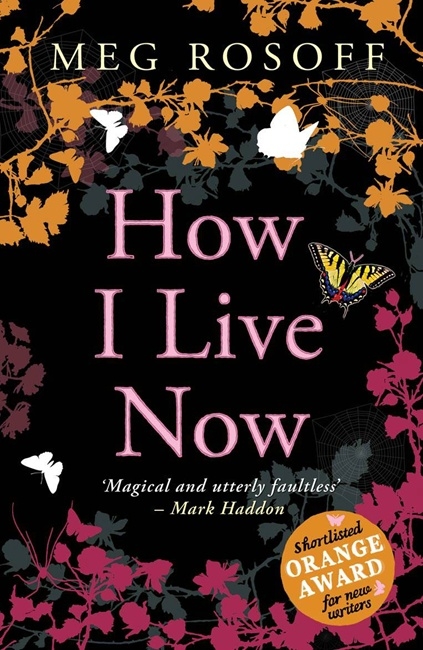
I am a bit of a fan of Meg Rosoff. Her first novel how i live now is a landmark book and a stunning debut. Rosoff worked on and off in advertising for about two decades before changing track with this extraordinary book. Her latest novel, The Bride's Farewell, keeps the standards high. It's a taut, gritty historical novel about a girl who flees from an arranged marriage and survives, somehow, in the fields and farms in C19th England.
UPDATE: The Wheeler Centre posted the video of our conversation here.
Gig two:
On Saturday 14 May, I am giving the final curator's floor talk for Look! The art of Australian picture books today.

Detail of illustration by Leigh Hobbs from Old Tom’s holiday,
Little Hare Books, 2002, ink, pencil and watercolour on paper,
State Library of Victoria
Gig three:
Then at the end of the May, Monday 30th to be exact, I am talking at Readings with Bernard Caleo as part of What It Is. This monthly comics event is a kind of an ideas laboratory for all things to do with comics, graphic novels, or in my case, bande dessinee. So I will be talking about Angouleme and what I know about French comics. Shouldn't take long.

Bernard Caleo is the publisher of Tango, a comics anthology. He is brilliant at making comics, talking about comics, and performing comics, so I am looking forward to that. It's sure to be a unique experience. Also speaking on the night is Brenton McKenna, Broome-based comic writer and illustrator, whose book, Ubby's Underdogs comes out very soon. I met Brenton last year when he still working on this book so I am dying to see the final results. As my conversation with Bernard is around creating Australian comics Brenton's experience should be fascinating.
Wednesday, March 2, 2011
Heavy Trash unload in France
This post is dedicated to the team at Rock Town Hall.
One of the highlights of the Angouleme Festival de la Bande Dessine were the Concerts des Dessines. Here's a taste of Heavy Trash, led by Jon Spencer, getting down to business.
Jon Spencer speaks not only the worst French you have ever heard, but forgets the name of one of the premier illustrators. But heck, c'est la vie, c'est la pierre.
The dignified guy with the silver hair is Baru, festival president. I have fallen just a bit in love with his work, which depicts working class men and their lives in an un-sentimental way, like the love child of Raymond Briggs and Paul Kelly. I like the way he draws, very tentative, feeling his way through to the character, nothing formulaic. Baru is joined by Chauzy and Flao.
Tour Baru's fantastic exhibition here.
But there is nothing stopping Jon Spencer, and when it all comes together at the end, well, it is indeed a very rock and roll moment. Or as the French say, un pur moment du rock and roll.
This year the festival presented three concerts with drawing. I was lucky enough to see all three. Fatoumata Diawara, the Malian singer and her polished, nimble band appeared with illustrator Clement Oubebrerie, his gentle watercolour and ink pen lines occasionally showing something stronger and darker.
There is more video and Concerts des Dessines at the festival website. Areski Belkacem, sorry - I'm drawing a blank, led a band through a story titled Coup de Foudre (a sudden blow to the heart/falling heavily in love) that involved masked wrestlers, femmes fatales and cross-dressing to audience heavily loaded with school kids. Who loved every biff and clinch. The music was a slithery, rhythmic set that offered endless twists and surprises, a kind of rootsy, moorish funk.
Comics and music: who knew they could be so damned groovy?
One of the highlights of the Angouleme Festival de la Bande Dessine were the Concerts des Dessines. Here's a taste of Heavy Trash, led by Jon Spencer, getting down to business.
Jon Spencer speaks not only the worst French you have ever heard, but forgets the name of one of the premier illustrators. But heck, c'est la vie, c'est la pierre.
The dignified guy with the silver hair is Baru, festival president. I have fallen just a bit in love with his work, which depicts working class men and their lives in an un-sentimental way, like the love child of Raymond Briggs and Paul Kelly. I like the way he draws, very tentative, feeling his way through to the character, nothing formulaic. Baru is joined by Chauzy and Flao.
Tour Baru's fantastic exhibition here.
But there is nothing stopping Jon Spencer, and when it all comes together at the end, well, it is indeed a very rock and roll moment. Or as the French say, un pur moment du rock and roll.
This year the festival presented three concerts with drawing. I was lucky enough to see all three. Fatoumata Diawara, the Malian singer and her polished, nimble band appeared with illustrator Clement Oubebrerie, his gentle watercolour and ink pen lines occasionally showing something stronger and darker.
There is more video and Concerts des Dessines at the festival website. Areski Belkacem, sorry - I'm drawing a blank, led a band through a story titled Coup de Foudre (a sudden blow to the heart/falling heavily in love) that involved masked wrestlers, femmes fatales and cross-dressing to audience heavily loaded with school kids. Who loved every biff and clinch. The music was a slithery, rhythmic set that offered endless twists and surprises, a kind of rootsy, moorish funk.
Comics and music: who knew they could be so damned groovy?
Friday, February 18, 2011
Streets of Angouleme
Not all the artwork is found indoors, in galleries or in books during the Festival International de la Bande Dessinee.
Here's a selection of street art and a couple of festival surfaces. Most of the street art was taken late on Saturday afternoon during a little walk through the town's narrow, winding streets. Even with the buzz of the festival, Angouleme is an attractive historic town. Limestone is the dominant building material and its widespread use makes the town feel ordered and calm. For me, having grown up around Fremantle, I found all this limestone quite evocative.


Here's a selection of street art and a couple of festival surfaces. Most of the street art was taken late on Saturday afternoon during a little walk through the town's narrow, winding streets. Even with the buzz of the festival, Angouleme is an attractive historic town. Limestone is the dominant building material and its widespread use makes the town feel ordered and calm. For me, having grown up around Fremantle, I found all this limestone quite evocative.
 |
| Let's start with the big one. Rue Hergé is the main street of the town. Here's the man it's named after. |

 |
| Cheating a bit here as the illustration is part of the festival imagery, but part of the flavour. |
 |
| Again, the festival uses BD images to good effect. |
 |
This one on a postbox appeared to be permanent. But not all course not all of the artwork is state approved. |
 |
| Someone I met while walking the ramparts. |
 |
| Another rampart dweller. |
 |
| Artists' studio doors |
 |
| Paste-up on the window of an empty yard. |
 |
| And another, part of a cluster of paste-ups. |
 |
This is found near the corner of Rue Froid and Rue du Soleil. |
 |
 |
| At night the limestone walls of the Hotel de Ville became a giant projection screen. |


Careful, they might hear you
It's always a little anxious-making when I am being interviewed for radio. I'm never sure what crazy thing I might be tempted to say, what crazy kite I'm trying to cut free. Luckily being interviewed is an infrequent event.

Late last year I was interviewed about Look! by Sarah L'Strange for the Book Show on Radio National.
At one point I told her that I didn't read much adult fiction because it was so boring. Thankfully this piece of wisdom was left on the cutting room floor. What did go to air is a really good 20 minutes about the pleasure and process of picture books. Also interviewed are Ann James, Shaun Tan and a couple of parents and their children.
You can hear the program via the Book Show website.

Late last year I was interviewed about Look! by Sarah L'Strange for the Book Show on Radio National.
At one point I told her that I didn't read much adult fiction because it was so boring. Thankfully this piece of wisdom was left on the cutting room floor. What did go to air is a really good 20 minutes about the pleasure and process of picture books. Also interviewed are Ann James, Shaun Tan and a couple of parents and their children.
You can hear the program via the Book Show website.
Wednesday, February 2, 2011
Welcome to Angouleme: world comics capital
 |
| Just one of the many marquees, or bulles, that are part of this massive festival. Photograph taken from the roof of le Hotel de Ville, looking onto le Noveau Monde marquee. |
Imagine the crowd at the MCG, the AFL grand final. Double it and then add a few thousand more.More than 200,000 people turned up for the 38th Angouleme International Festival de la bande dessinee. And like an AFL grand final, people come from all levels of society. Angouleme, two hours by TGV south-west of Paris, is indisputably the home of BD in France. Don't be put off by the term 'la bande dessinee': literally it means 'drawn stories' and encompasses comics, graphic novels and sometimes picture books.
 |
| Saturday afternnon in Angouleme: packed! |
Diversity is at the heart of this extraordinary festival. Across four days and nights, the festival caters to all tastes. Exhibitors, artists and publishers also come from all over the world.I met French, Romanian, Belgian, Finnish, French, Spain, and Hong Kong publishers, writers and producers.
Australia however, is largely invisible. In 2008 Shaun Tan won the festival's Best Album prize for Là où vont nos pères, or The Arrival. The young independent publisher I spoke to this weekend thought Shaun is an American. We are the great unknown, and Australians could learn a great deal by coming to this festival. Why more, or indeed any, Australians don't go there is a mystery to me.
Highlights included:
This year's festival president, Baru, is renowned for autobiographical depictions of the French (and migrant) working class, beginning in 1982 with Quéquettes Blues. The exhibition that honoured Baru's work was generous, imaginative, sympathetic, just a delight to explore and experience. Baru's exhilarating exhibition Debout les damned de la terre (translating roughly as Showing the damned of the earth) is a journey through working class lives over fifty years. Baru's massive body of work was smartly curated, displayed with real panache, and a great introduction to this artist.
 |
| Part of the marvellous Baru show that also included video, a documentary film, juke-box, old cars, boxing, rock and roll and original examples from his huge body of work. |

Kaleidoscope: a history of bande dessinee in Hong Kong produced by the Hong Kong Arts Centre succinctly, elegantly and engagingly explored a turbulent past and present. The show - designed for touring - touched on the political, economic and technological changes that have driven Hong Kong's diverse visual comics culture. But it looked so good that it could easily stand as a permanent exhibition. I would love to see this show in Australia.
 | |
| Kaleidoscope world: Hong Kong's classy comics history |
 |
| Kaleidoscope was housed in a former 'cave', a storage space for wine and grain. |
 |
| The design of the Hong Kong show was museum quality - built in road cases and designed for travel. |
The varied, diverse and distinct thematic marquees, ranging from the big (really packed) commercial houses to the edgy and innovative (Pavillon Jeunes Talents). If you want to see what is happening in comics internationally, this is a great way to see it. Angouleme is not just French and Belgian comics: it welcomes the world. The French remain famously relaxed in matters of sexuality.
 | ||
| Vie de Merde is a raunchy, very funny slice of teenage life. |
And finally, Les Concerts des Dessins. I saw three, each very different in flavour though using the same ingredients: live music matched live drawing. Malian singer Fatoumata Diawara was coolly complemented by illustrator Clement Oubrerie. On the other hand, Jon Spencer's new outfit Heavy Trash rocked the house down (around 800 screaming French women and men going absolutely bonkers) while Baru and friends drew up scenes of rockabilly mayhem, culminating in the artists setting fire to their pictures. Why don't all concerts come with live illustration? It was a hell of a way to go out.
 |
| Baru and friends get Jon Spencer up on the screen, while the band rocks on stage. |
Angouleme is not a convention, or a fan-meet. And it's not, obviously, only about Tintin, Asterix and Spirou. There is an exhaustive schedule of in-conversations, panels and debates. 'Is Temeraire a little Nazi?'; 'Teaching BD in art school'; 'Lesbians and bande dessinee' 'Violence and manga'; 'Mainstream or indie - is it necessary to choose?' There is also a rights market, meetings with artists, film screenings and projections, book signings, sales (oh, my suitcase) and an incredible buzz throughout the town.
The festival is both a celebration and a masterful promotion of the bande dessinee. Prizes are awarded on the final night. This year's Angouleme Festival Grand Prize winner, and therefore next year's festival president, is Art Speigleman. The shortlist of 51 titles in a range of categories are heavily promoted in bookshops and beyond. FNAC (think JB HiFi meets Borders meets Ticketmaster), is a festival sponsor. National newspapers and magazines across the political and cultural spectrum get their hands dirty. The industry, its artists and readers, are taken seriously.
Yes, the French comics industry was built on the likes of Tintin and Asterix, but there is so much more. So, so, so much more.
Travel to Angouleme was supported by the Copyright Agency Limited Creative Industries Career Fund.
My host Evelyne was also extraordinarily helpful in all sorts of ways.
Merci beaucoup, Evelyne. Vous êtes génial!
Subscribe to:
Posts (Atom)